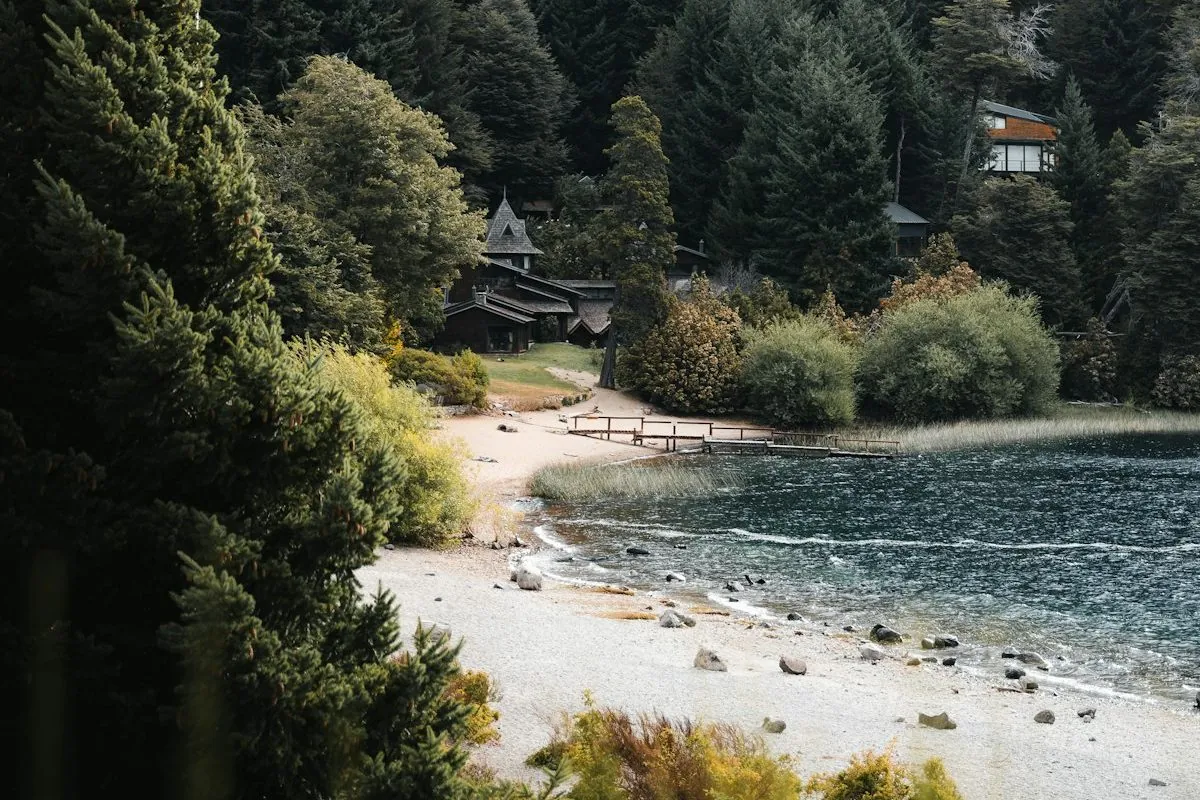
The best lots up here come with the most rules.
Water and views are why people build in Northern Michigan. They are also what trigger the extra permits. None of this should stop a project, but it should be known before the house is designed, because it decides where the house can sit.
Permits are applied for by the owner or builder. We don't apply for or manage permits.
Within 500 feet of a lake or stream
In all four counties we work in most, earthwork within 500 feet of a lake or stream needs a soil erosion permit. On a waterfront lot that is essentially every project. The office that issues it varies: the county health department in Grand Traverse, the Conservation District in Leelanau, and the building or construction code department in Antrim and Benzie.
Slopes and driveways
Slope can trigger the same permit even away from the water. Grand Traverse County requires a soil erosion permit on slopes of 20% or steeper. Leelanau requires one for driveways with a slope of 10% or more, and for any project that disturbs an acre or more.
Natural Rivers
Three rivers in the area are state-designated Natural Rivers, and each has a 400-foot district along it with its own building setback and a strip of natural vegetation that has to stay:
- Boardman River (Grand Traverse): building setbacks of 100 to 150 feet, depending on the stretch.
- Betsie River (Benzie): a 200-foot building setback on the mainstream.
- Jordan River (Antrim): 200 feet on the mainstream and 100 feet on tributaries.
Critical dunes
The state maps Critical Dune Areas along Lake Michigan. In Leelanau County they are in Centerville, Cleveland, Empire, Glen Arbor, Leelanau, and Leland townships. In Benzie County they are in Crystal Lake, Gilmore, Blaine, and Lake townships, and Antrim County has one in Torch Lake Township. Building in a critical dune requires a permit from the state (EGLE) and limits where and how much of the site you can disturb.
Wetlands and the water's edge
Work in a wetland, in a stream, or below the ordinary high-water mark of a lake needs a state permit as well. Township zoning ordinances often add their own waterfront setback on top of that, so check the township before assuming the state setback is the only one.
What this means for design
- Get the survey first. On a sloped or waterfront lot, the grades and the water line decide where the house goes. Designing before you have them usually means redesigning.
- Draw the setbacks before the floor plan. Once the water setback, the side setbacks, and the septic field are on the site plan, the buildable area is often smaller than it looked.
- Let the slope work for you. A walkout lower level, a driveway that follows the grade, and a house placed to limit earthwork all reduce cost and permit trouble.
Rules and setbacks change, and each parcel is different, so confirm the specifics with the offices involved. If you have a waterfront or sloped lot and want to know what applies, reach out and tell us where it is. Our county guides list who to call.